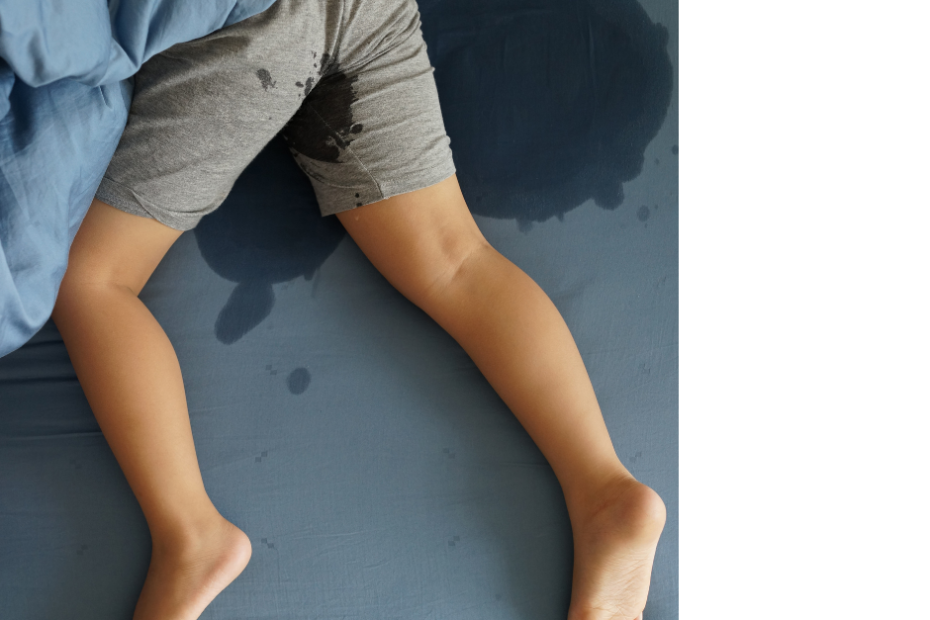
Bedwetting can be one of the most frustrating and confusing challenges for both parents and children. While occasional accidents in early childhood are normal, persistent bedwetting beyond the age of six or seven often leaves families searching for answers.
Primitive reflexes that remain active in a child’s body longer than they should can quietly interfere with bladder control, body awareness, and the brain’s ability to manage nighttime regulation.
The Role of the Spinal Galant Reflex in Bedwetting
Among all the primitive reflexes, the Spinal Galant Reflex is most commonly associated with bedwetting.
This reflex is present at birth to help the baby move through the birth canal. It’s triggered by gentle stimulation along the lower back — causing the hips to wiggle or move side-to-side. When it’s retained, the child’s lower back becomes overly sensitive to touch or pressure. This sensitivity can cause involuntary activation of the bladder at night, especially when the child moves against sheets or pyjamas during sleep.
In other words, a child may wet the bed not because they’re unaware, but because their nervous system is still reacting automatically.
The Emotional Impact
Bedwetting isn’t just a physical issue — it affects confidence and emotional wellbeing. Children who continue to wet the bed often feel embarrassed, anxious about sleepovers, or afraid they’re disappointing their parents. As parents, it often becomes frustrating having to endure broken sleep and having to do yet another load of laundry in the morning…especially in winter!
How Reflex Integration Can Help
When the Spinal Galant reflex is addressed through specific targeted reflex integration parents may notice:
- Reduced sensitivity in the lower back area
- Fewer nighttime accidents
- Improved posture and core stability
- Better sleep and calmer behaviour during the day
These changes happen because the nervous system becomes more mature and better regulated. As primitive reflexes integrate, higher brain centres take over control — including the pathways that regulate bladder awareness and control during sleep.