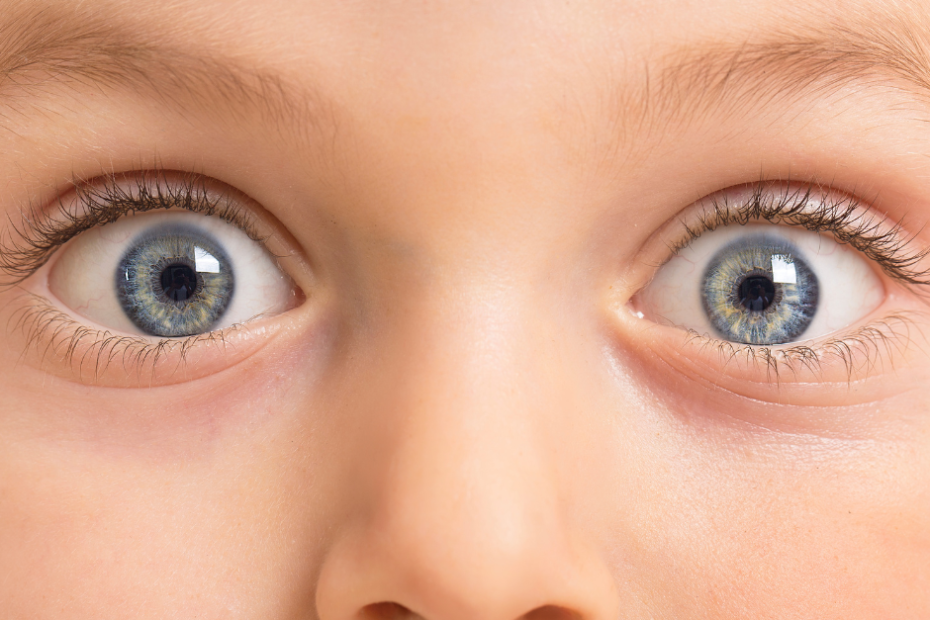
When I screen a client for primitive reflexes, I always do a basic test of vision. Not the type you may have when you see an optometrist, but one from a reflex perspective. Looking to see how the eyes work together, whether they can move independently to the head, whether other muscles have to activate or whether parts of the body need to tense in order to visually focus.
It is possible to have “perfect” eyesight yet continue to battle visual fatigue, tracking problems, or blurred focus. What’s often overlooked is that vision is more than 20/20 eyesight — it’s a complex process involving the eyes, the brain, and the body working together in harmony.
An often-hidden factor affecting this system is the presence of retained primitive reflexes — automatic movement patterns from infancy that should integrate as the brain matures. When these reflexes remain active, they can interfere with eye movement control, visual focus, and the ability to interpret what the eyes see.
Understanding Primitive Reflexes and Their Role
Primitive reflexes are the first movement programs of life, emerging in utero and active during the first months after birth. They help the newborn survive, feed, and begin developing head and eye control.
As the brain matures through movement and sensory experience, these reflexes are gradually inhibited or “integrated.” In their place, higher-level postural and visual reflexes take over — supporting smooth eye tracking, coordinated hand–eye movement, and stable posture for reading and writing.
If this process is disrupted, and a primitive reflex remains active,the result can be subtle yet wide-ranging visual inefficiencies.
Primitive Reflexes Influencing Vision
Asymmetrical Tonic Neck Reflex (ATNR)
The ATNR appears around 18 weeks in utero and integrates by 6 months of age. When the baby turns its head, the arm and leg on that side extend while the opposite side flexes — helping develop eye–hand coordination and visual tracking.
If the ATNR remains active, a school-aged child may unconsciously turn their head when writing or reading, lose their place on a page, or struggle to track lines of print smoothly acrioss the midline. Their eyes and hands are literally being pulled into different directions by the body’s reflex pattern.
Symmetrical Tonic Neck Reflex (STNR)
Emerging around 6–8 months and integrating by 11 months, the STNR assists in learning to crawl. It links head movement with arm and leg coordination.
When retained, the STNR can interfere with focus shifting, sometimes called accommodation vision. This is the ability to quickly move the eyes from near to far (like from a book on a school desk to the whiteboard). Children with an active STNR may also slump over their desks or prop their head on their hands because postural control is weak, making sustained visual focus tiring.
Tonic Labyrinthine Reflex (TLR)
The TLR controls how the body responds to head position relative to gravity. When the head tips forward, the body flexes; when it tilts back, the body extends.
If unintegrated, the TLR can affect the muscles around the eyes and neck, disrupting visual convergence (the ability to bring both eyes inward to focus on close objects). This often shows up as skipping words, difficulty with reading comprehension, or eye strain. As the TLR helps the body to open up and extend out of the curled foetal flexed position, the TLR if unintegrated, can also affect the visual field limiting the peripheral vision.
Moro Reflex
This “startle” reflex prepares the infant for survival. If it persists, the child’s visual system can become over-responsive to light, movement, or visual clutter. They may appear jumpy or easily distracted by things in their peripheral vision, bright lights or sudden changes in lighting making classroom focus difficult.
What This Looks Like in Everyday Life
A child with retained reflexes impacting vision may:
- Lose their place or use a finger to track while reading
- Reverse letters or struggle with spacing on paper
- Complain that words move or blur
- Avoid reading or copy work due to eye strain
- Become fatigued with bookwork or reading
- Rub their eyes after reading
- Show poor hand–eye coordination in sports
- Be unusually sensitive to light, movement, or busy environments
These signs often lead to frustration or avoidance behaviours which at times are mistaken for inattention or learning difficulties.
How Reflex Integration Supports Visual Development
Through movement-based neurodevelopmental programs such as Rhythmic Movement Training (RMTi) or other reflex integration approaches, it’s possible to stimulate the same pathways that mature the visual and postural systems in infancy.
Gentle, rhythmic, and patterned movements replicate early developmental sequences, helping the brain link eye movements with head, neck, and body stability. As reflexes integrate, the eyes can move independently of the body, focus more steadily, and coordinate efficiently.
RMTi Consultants work to combine reflex integration with visual-motor or vision therapy activities, achieving powerful results for children struggling with focus or reading.
Supporting Visual Maturity at Home
Parents can encourage healthy visual and reflex development through simple daily activities:
- Encourage tummy time, crawling, and cross-pattern play
- Provide opportunities for balancing, rolling, and climbing
- Limit prolonged screen use and ensure varied visual experiences outdoors
- Seek assessment from a professional trained in reflex integration or vision development if reading or focus problems persist
The Big Picture
Vision doesn’t happen in the eyes alone — it’s a full-body process! Retained primitive reflexes can quietly disrupt that process, making reading, focus, and coordination far more effortful than they should be.
By recognising the link between reflex integration and vision, we can better support children not just to see clearly, but to use their vision efficiently and confidently — opening the door to calmer learning, greater focus, and easier movement through their world.