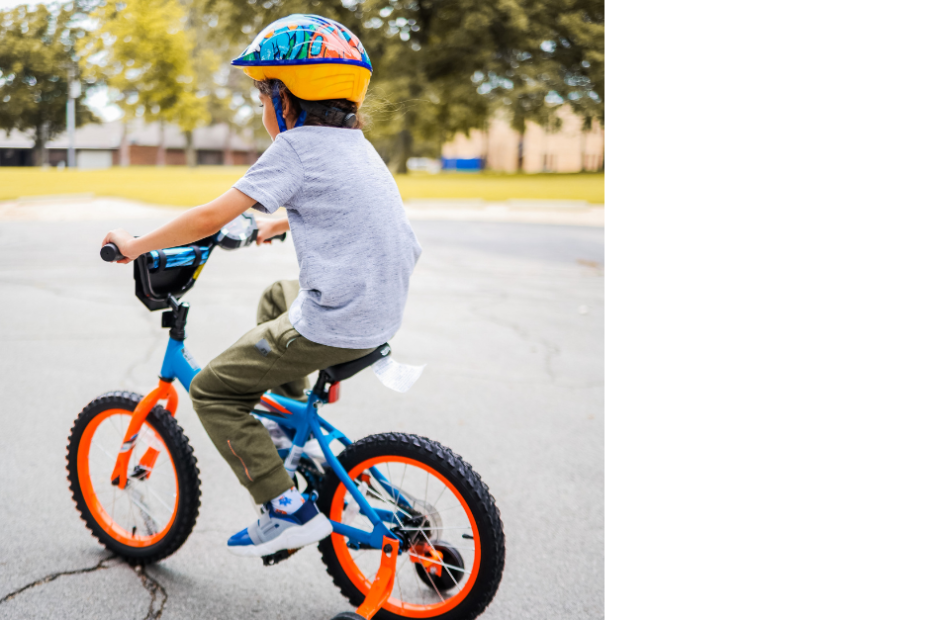
Learning to ride a bike can be one of childhood’s great milestones! For most children, mastering two wheels happens with some trainer wheels, some skinned knees, a parent chasing alongside and a lot of practice and encouragement. But for some, it’s a battle. Despite trying hard and even despite showing coordination in other active pursuits, some kids wobble, fall, or simply can’t seem to coordinate pedalling, balancing, and steering all at the same time. When a child has persistent difficulties with bike riding, the root cause may lie in the primitive reflexes.
The Brain-Body Connection: What Are Primitive Reflexes?
Primitive reflexes are the body’s earliest movement programs — automatic responses that help a baby survive and begin developing control over movement. They are triggered by specific stimuli, such as head position, sound, or touch.
These reflexes should integrate as higher brain centres mature during the first year or two of life. However, when these reflexes stay active in the body, instead of integrating, they can interfere with later motor and balance skills — including the complex coordination needed for cycling.
A child trying to ride a bike with active primitive reflexes may:
- Struggle to balance without training wheels long after peers have mastered it
- Constantly veer left or right
- Appear anxious or easily startled when moving faster
- Have poor endurance or tire quickly
- Find it hard to coordinate pedalling, steering, and braking
- Avoid bike riding altogether, saying “I can’t do it”
Why Bike Riding is so Complex
Riding a bike is one of the most neurologically demanding skills a child learns.
It requires:
- Postural control (to stay upright)
- Dynamic balance (to adjust constantly while moving)
- Bilateral coordination (both sides of the body working together)
- Eye–body coordination (to steer, scan, and react)
- Motor planning (to sequence pedalling, braking, and steering)
When primitive reflexes are retained, these systems can’t communicate smoothly. The child’s brain is trying to control complex voluntary movements while old, reflexive patterns are still firing in the background. When the battle is between voluntary movement and reflexive movement, reflexive movement will win – it’s subconscious and automatic.
How Specific Reflexes Affect Bike Riding
Moro Reflex (Startle Reflex)
A retained Moro reflex may cause the child’s body to overreact to movement, noise, or sudden changes in direction. On a bike, this can mean freezing, panicking, or over-braking when they start to wobble. They may seem anxious, avoid riding altogether, or quickly lose confidence after a fall.
Tonic Labyrinthine Reflex (TLR)
The TLR influences muscle tone and balance relative to the head’s position. A retained TLR can make it difficult for a child to keep their balance when leaning forward on the bike. They might either stiffen up or slump, both of which make steering and pedalling harder.
Asymmetrical Tonic Neck Reflex (ATNR)
This reflex links head turning with arm and leg movement. If still active, it can cause one arm or leg to extend when the head turns — disastrous when trying to look behind or steer smoothly! These children often veer off course, struggle to ride in a straight line, or fall when checking for traffic.
Symmetrical Tonic Neck Reflex (STNR)
The STNR separates upper and lower body movement during crawling — a key step toward balance and coordination. If it lingers, the child may have difficulty maintaining posture on the bike, especially when transitioning from looking up to looking down. It also disrupts the rhythm between arms and legs needed for pedalling and steering together.
How Reflex Integration Helps
Rhythmic Movement Training (RMTi) uses gentle, rhythmic, repetitive movements that mimic a baby’s early developmental patterns. By doing so, they help the brain “revisit” and complete unfinished reflex integration.
With one 8 year old boy, using rhythmic isometric exercises for a couple of minutes before bike riding helped to create a noticeable difference in his ability to sit upright on the bike, maintain balance and freed his arms up to steer without changing his upper body posture.
When a child struggles to ride a bike, it’s rarely a reflection of effort or willpower. It’s often a sign that the foundation of movement and balance still needs a little more support. Paying attention to address the interrupting effect of reflexes helps to building both the neurological readiness and the self-belief children need to find freedom on two wheels.